A 14-year-old kid got pulled out of public school, labeled with a learning disability, and told by a guidance counselor that graduating sophomore year would be a miracle. His mom pointed him at an HVAC vocational track because it was the only door left open. Thirty years later that kid runs a wildly successful multi-state HVAC emergency service company with stores across several states, including a flagship operation doing roughly $10 million on its own, and now he is planning to build a school to do for other broken-home kids exactly what his mom did for him. That is the story behind Fast Response, and it is the clearest argument I have ever heard for why a real HVAC training program is the most valuable thing a successful contractor can build next. Rob is not there yet. The school is his plan, and HVAC Growth is partnering with him to get it off the ground.
I sat down with Rob, the founder of Fast Response, and his son Mike, who runs the Kentucky and Tennessee markets out of Louisville. They were introduced to me through Dennis Yu, who has been the connector for almost every conversation like this I get to have. What started as a get-to-know-you call turned into the most honest hour I have spent with a contractor in months. No ego. No chest-puffing. Just two guys who built something hard and now want to hand the blueprint to kids who have nothing.
27 Years In, and the Best Part Is the Phone Call Every Morning
Mike will be 31 in July. He has worked alongside his dad for about 27 of those years, full-time since 16, summers in attics and crawl spaces before that. He showed up to his own high school graduation in work boots because he came straight off a job. He has a black belt in karate and state licenses in Texas, Florida, Tennessee, and Kentucky. He has run the Kentucky market for nearly 10 years while Rob runs another, and Rob says the market Mike runs does about $10 million on its own.
Here is the line that stuck with me. Rob said the statistics tell you that by the time a kid leaves the house, you have already spent more than 90% of the time you will ever spend with them. Rob talks to Mike four or five times a day. He did not set out to build a CEO. He set out to be near his son, and the business was the excuse to do it. That is the same instinct I see in every great operator I work with, from Joe Davis at Brothers Air in Dallas-Fort Worth to Donnivin Brown at Southern Comfort in Houston. Family first, business second, and the business gets better because of it.
The Metric That Actually Matters: People, Not Leads
Most contractors who call me want more leads. Fast Response has the opposite problem. Rob told me straight: the phone rings too much already. They spend $3,500 a day on gas in Louisville alone. They have 39 employees and more demand than they can serve. Their bottleneck is not marketing. It is people, and that is exactly the gap the HVAC training program he is building is meant to close. They cannot scale because they cannot find and grow enough qualified technicians fast enough.
This is where the Metrics, Analysis, Action framework Dennis Yu taught me reframes the whole conversation. The metric is not impressions or clicks. The metric is qualified technicians recruited, trained, and retained. Rob is aggressively recruiting out of hospitality, bartenders, Uber drivers, front desk staff, bellhops, waitresses, anyone capped on income who has the one thing he cannot teach. His words: he recruits for personality, because he can teach a person how to hold a wrench and read a meter, but he cannot teach empathy and ethics. The technical is the easy part. The human is the whole game.
The Analysis: Why an HVAC Training Program Beats Poaching Veterans
Here is the comparative benchmark that makes the case. A 20-year HVAC veteran on the open market typically arrives with bad habits, baggage, and a price tag, and there is no guarantee of loyalty. A green hire pulled from hospitality and trained inside your own system arrives with no bad habits, a service mindset already proven in a tip-driven job, and a reason to stay loyal because you are the one who gave them the trade. Rob has had companies started on his back. He has trained people who turned around, stole accounts, took crews, and walked. The lesson is not to stop training people. The lesson is to train them your way, on your culture, so the loyalty is built in from day one.
Run the rough math on a single trained technician. A productive residential install and service tech can carry $40,000 to $80,000 a month in revenue once ramped, and a $12,000 system replacement is a different animal entirely than a $200 drain call. If a six-week HVAC training program turns one hospitality worker into a producing tech, the return is not measured in cost per lead. It is measured in a new revenue-generating seat that also fills with someone who actually wants to be there. That is the kind of asset that compounds, the same way a properly built digital asset compounds for a contractor online.
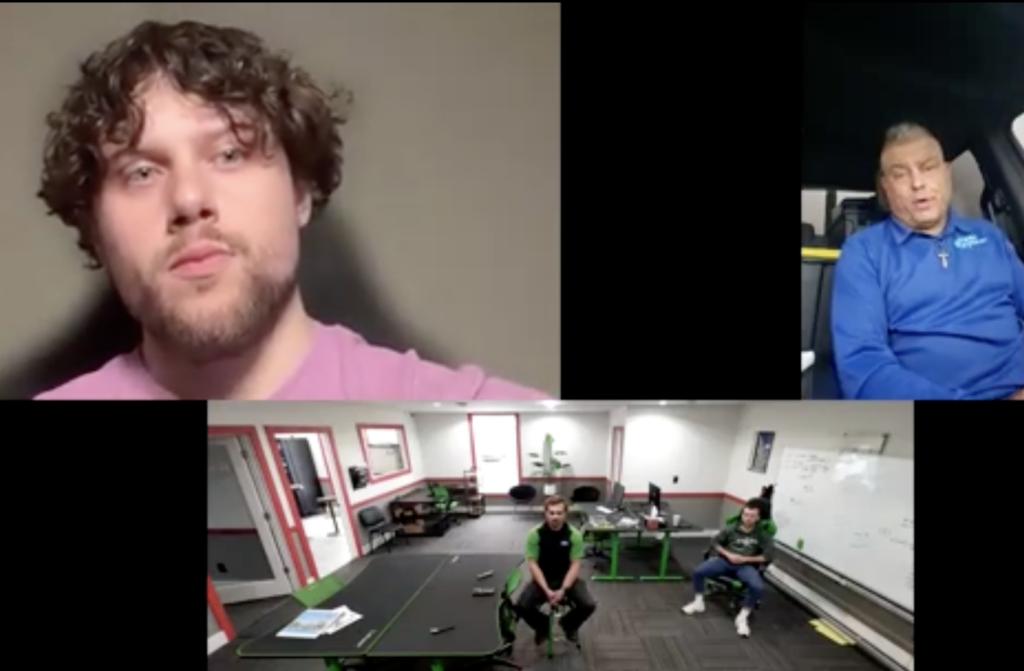
You see the same family-first pattern in operators like Anton Arnett at Arnett Mechanical in Texas to get his time back and stay technician first. Watch how that mindset shows up on the ground.
Inside the Planned HVAC Training Program: The Blueprint We Are Building
The plan Rob laid out for me is ambitious. The first class targets 32 students twice a day, morning and evening, aiming for eight graduating classes a year. The bones are already in place. Mike runs a facility in Louisville just shy of 15,000 square feet not counting shop space, and the Ohio facility in Hilliard is about 40,000 square feet with an entire mockup house and garage built inside it. The vision is to train a future tech at the kitchen table, on the couch, at the condenser in the backyard, and in a fully staged garage. A house inside a building, so every real-world scenario gets rehearsed before the tech ever rides to a customer. That is the standard Rob is building toward, and it is exactly the kind of launch HVAC Growth is here to help him bring to market.
What will separate this from a typical trade school is the curriculum Rob wants to teach beyond the wrench. Students will learn public speaking on a real stage because communication is what turns a technician into a closer. They will learn the installation craft until the work looks like a Picasso. And finance will be required, not optional. The plan is for 18 and 20 year olds to learn how to budget, how to open a bank account, how to write a check, how to tithe, how to set up a 401k, how to invest. Rob said it plainly: he took a lot of losses before he learned to budget, and a couple of his own crash-and-burns could have been avoided if someone had taught him this at the start. He wants students showing up on time, in pressed full uniform, with a barber on site keeping everyone high and tight.
Action: How to Build the Recruiting Pipeline This Week
If you are a contractor watching Fast Response and thinking you need this, here is the click-level starting point that does not require a 15,000 square foot building. First, open your Google Business Profile dashboard at business.google.com, click Posts, and publish a recruiting post with a real photo of a current tech on a job and a caption naming your city and the words "now hiring, we train." Recruiting content ranks and gets seen by locals who are not searching job boards.
Second, set up a $1 a day recruiting campaign on Facebook. Go to facebook.com/adsmanager, create a new campaign with the Leads objective, and boost a single 60-second video of you or your best tech explaining what the job actually pays and why the trade beats fast food and a county job. The dollar a day strategy Dennis Yu built is the cheapest way to test which recruiting message makes the phone ring before you spend real money. Third, pull one ride-along candidate from hospitality this week. Fast Response will not let a recruit sign up for school until they ride with a tech first, because the trades are not for everybody and a ride-along flushes out the wrong fit before you invest six weeks in them.
Making the Trades Cool Again Is a Marketing Problem
Rob said the trades are dying, and he is right that it is good news for the people already in them because their value keeps climbing. But the long game is reversing it. The kids do not think the trades are cool. They think coding and gaming and sports are the path. The way you change that is the same way you change how a homeowner picks a contractor. You build a brand people know, like, and trust, you put a real human face on it, and you let an HVAC training program be the proof that the path is real. That is exactly what Local Service Spotlight does for contractors on the reputation side, turning real reviews and real stories into a presence people can actually find and trust on Google.
For Fast Response the plan is straightforward. Put Mike on camera as the face of the program, because warm recognition makes recruiting leads convert. When a candidate sees Mike in a video and then meets Mike at the training center, they already trust him. We tie together every asset, the website, the Google Business Profiles across markets like Louisville, Nashville, Fort Myers, and Dallas, and the social channels, then point a recruiting-focused dollar a day campaign at each market. This is the same entity-building approach I wrote about in my piece on vertical niche marketing in 2026, just aimed at recruiting talent instead of booking jobs. The next generation of operators learning this is exactly who Dennis is training through High Rise Influence, the apprentice pipeline behind the whole ecosystem.
Why This One Hit Different
I did not finish my college degree either. School was a uniform path my brain never fit, same as Rob's. So when he talked about being the poor kid on the short bus who turned out to be gifted at communication and repair the second someone put him in the right room, I felt it. The whole reason I do this work is that I was a younger version of the kids Rob is now trying to save, just in a different field. He is building a school to take a kid off the street and get him producing, supporting his mom, building a life. I get to help make that school findable. That is not a bad way to spend a career.
Rob is a man of faith, and so is Mike, and so am I. None of them will tell you how good they are, which is exactly why someone has to. Fast Response built something real over 30 years, with a lot of failures and a lot of grace, and now Rob is getting ready to point all of that at the next generation. He has already won the hard part, a thriving emergency HVAC operation. The school is the next chapter, and we get to help him write it. If you run a successful home service company and your real bottleneck is people and not leads, a structured HVAC training program tied to a recruiting brand may be the highest-leverage thing you build next.
If you want to see what that looks like inside your own market, request your free HVAC marketing audit and we will map out exactly how to turn your recruiting into a pipeline that fills seats instead of just chasing leads. Metrics. Analysis. Action. That is the whole game.